%

BTC

ETH

Improved sustainability in agriculture will come thanks to blockchain technology
Interview with Dimitra

The agricultural industry went through a major metamorphosis during the industrial revolution, and it might be set for another groundbreaking evolutionary stage now with sustainability in agriculture. With the rise of blockchain technology, the farming and agricultural sectors are witnessing a lot of innovation, improvements, and improved sustainability in agriculture.

According to the founders of AgTech company Dimitra. The opportunities for the agricultural sector to benefit from blockchain-based tech are endless. Find out more about the future of AgTech in the latest Cointelegraph Interview below.

Agriculture and technology merge

Q: Is the adoption of blockchain technology becoming more widespread across the agricultural industry? What are the main challenges for small farmers and agricultural companies to incorporate this technology?

The adoption of blockchain technology is growing within the AgTech sector; the spread of mobile devices has made farming applications accessible to farmers globally. Earlier in developing nations, few farmers had laptops or computers. Mobile device penetration in rural areas lagged in developing countries.

Early applications were basic and didn’t work well offline, which is a necessity in agriculture. They also only offered a few features requiring farmers to buy several applications, which was a significant deterrent.

Initially, mobile-based systems were distributed in North America and Europe. Farmers in developing nations have struggled with expensive Agtech applications and their licensing costs.

Q: What is AgFi? What are the key aspects of this nascent space, and how can AgFi help farmers?

AgFi is digitizing the farming value chain from crop to end consumer and combining agronomic sciences, environmental sciences, blockchain, remote sensing, IoT sensing, and machine learning with AI algorithms.

AgFi helps farmers make data-driven decisions and connects their farming operations to their financing and insurance activities, providing them with a complete enterprise-based system.

Q: Both crypto and the agricultural industry have been blamed to be dangerous to the environment. Is there a way to offset the negative effects by combining the strengths of both of these industries?

Historically farming has focused on productivity without consideration for environmental effects. In the past decade, Ag sciences have improved and developed new techniques to make farming sustainable. Converting the world’s farmers requires training. Blockchain-based systems can help measure carbon performance and advise farmers on techniques that optimize their carbon performance while maintaining productivity.

Dimitra believes that educating farmers via our platform is key to addressing these issues. We reward them with points and DMTR tokens by following best practices, helping the planet and the farmer (through monetization of their data) at the same time.

AgTech is for farmers and investors alike

Q: What is the other side of the coin, how can blockchain tech help investors get into the farming and agricultural industry?

There is a perfect convergence of demand, growth, and regulatory pressure that will drive blockchain-based adoption in agriculture. Investors need to consider these market factors as well as perform specific research into the companies operating in the space. The AgTech and AgFi sectors are ripe for innovation, with digitization growth rampant on a global scale.

Agriculture itself is a 12.5 trillion USD industry growing at a compound annual growth rate of 11.1%. The food sector is an 8.77 trillion dollar industry and is forecasted to reach 11 trillion USD by 2027.

Q: What is Dimitra’s target audience? Are you looking to help farmers or investors, or does your company offer solutions for both?

Dimitra’s target audience is farmers and investors.

Investors who want to support the global food and agriculture industry while making an impact on the environment, global poverty, and the ability to benefit from the volume, revenue, and price growth of one of the world’s largest industry verticals.

Farmers who want access to digital analytics of their farm to help make better decisions; access to capital for inputs and trade financing; access to insurance designed for small farmers to mitigate weather, climate, and pest risks.

Q: What is the DMTR token, and how does it work to bring utility to both farmers and investors?

The DMTR token is an ERC 20 token. Farmers can pay for their licenses of the Dimitra Connected Farmer or Livestock Guru with DMTR tokens. Users of the platforms will have the ability to buy and sell goods within the Dimitra marketplace through the use of the DMTR token. Users can also stake their tokens via the DMTR portal. Farmers’ crops or livestock can use track and trace from seed via the entire supply chain.

Farmers download our application on their mobile phones, geofence their farms, and then start communicating with the platform. As they communicate with the platform, they receive Dimitra points. Then once they get to a certain level, they can offramp from the DMTR points to DMTR tokens, other cryptos, and local fiat currencies and buy goods like sensors in the DMTR marketplace or sell their goods.

Other utility functions within Dimitra include data and analytics, input loans, trade finance, crop insurance, carbon credits, logistics, track and trace, and token burn initiatives. sustainability in agriculture

Q: What do you think the future holds for AgFi and the industry as a whole?

The opportunities for AgFi products are endless if approached correctly. It may be the largest underserved industry segment in the world and within the blockchain world. There are new financing opportunities, new insurance opportunities, growing demand for provenance, track and trace, the incredible demand for data, and increased focus on decarbonization, freshwater conservation, soil biodiversity, soil loss, sustainable and precision farming, food waste reduction, food safety, and security.

It is an exciting new opportunity that makes a real difference in many UN Sustainability objectives. Environment, world hunger, poverty, and many more. sustainability in agriculture
Dimitra Incorporated

New Horizon Building, 3-1/2 Miles Philip S.W. Goldson Highway, Belize City

info@dimitra.io
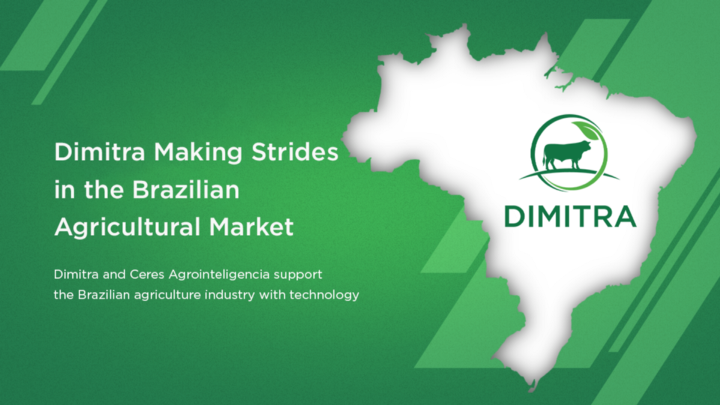
Dimitra Making Strides in the Brazilian Agricultural Market

BELIZE CITY, BELIZE — Dimitra Incorporated, a global Agtech company on a mission to make its technology available to farmers globally, is working with Ceres Agrointeligencia in the Brazilian agriculture market. This Brazilian organization specializes in providing services and technological solutions for agribusiness. Dimitra and Ceres Agrointeligencia are exploring the Brazilian agricultural market, starting with the southern region of Brazil.

The south of Brazil is a leading agricultural producer in Brazil. It is responsible for 70% of the wheat and soybeans, 65% of the grapes, and 50% of the corn and rice produced. As well as cotton, sugarcane, oranges, and coffee production. Specifically, the first region Dimitra and Ceres Agrointeligencia are focusing on is Paraná, which is of more than 400,000 farms. It has dozens of cooperatives, some of which are the world’s largest.

Brazilian agriculture market

Ceres and Dimitra have been approved for the Inova Invest program within the Brazilian agriculture market. This program explores tools and technological solutions that help advance trade and traceability for trade export companies, international buyers, and national and foreign investors.

Invest Paraná, a company created to support local companies and new investments, is promoting the Inova Invest Program. Invest Paraná acts as a bridge between the government and private sectors, helping to collect data, provide information and make strategic decisions.

Building a Strong Ecosystem

With Invest Paraná and the Inova Invest Program, Dimitra and Ceres will build a strong ecosystem, allowing them to offer several services to farmers and agricultural institutions. In addition to the Connected Farmer app. It will help the farmers to produce more, services and market reports will be offered to companies and cooperatives.

Despite Paraná being a state with large, high tech farmers, tens of thousands still struggle to make ends meet. One of the first objectives of these organizations working together is to find a way to support projects that are strengthening these small farmers and regional agricultural products. These organizations will help these farmers by sharing knowledge and allowing farmers to offer traceability on their products.

Dimitra Incorporated

New Horizon Building, 3-1/2 Miles Philip S.W. Goldson Highway, Belize City

info@dimitra.io
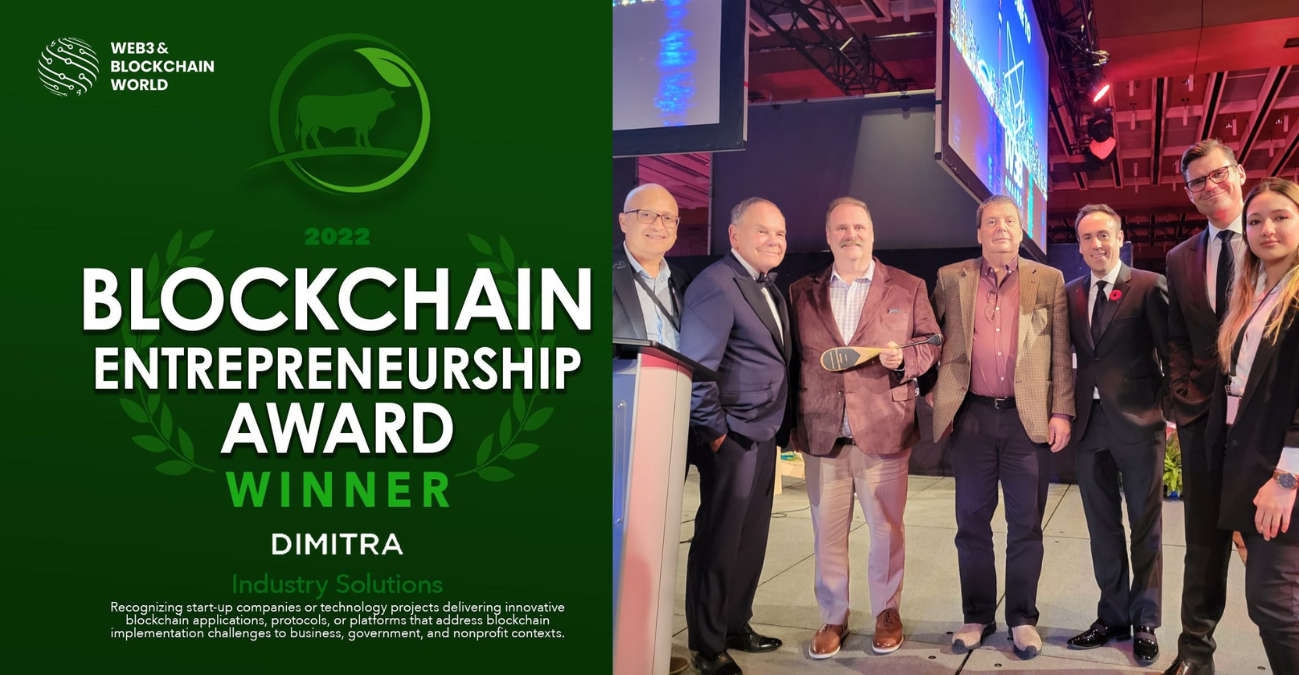
Dimitra awarded World Web3 & Blockchain Entrepreneurship Award

Dimitra Technology is the winner of the W3B & Blockchain World 2022 Entrepreneurship Award in the Industry Solutions Category. This award recognizes start up companies or technology projects. These projects deliver block chain applications, protocols, or platforms that address block chain implementation challenges to business and governments.

Formerly known as the Enterprise Blockchain Awards. The Web3 & Block chain Transformation Awards (W3B Awards) recognize the exceptional leaders, researchers, innovators, entrepreneurs, and service providers driving global block chain transformation. The awards honor those that have made a measurable difference within their ecosystems and across industries.

This year we received a record breaking number of submissions. These represent a diverse and international community of block chain researchers, leaders, innovators, builders, and service providers. After careful deliberation, the W3B Awards judging panel has shortlisted 35 finalists in eleven award categories.

Winners announced at the W3B Awards Gala in Toronto on November 8, 2022.

“We are excited to share that Dimitra Incorporated is the winner of the W3B & Blockchain World 2022 Entrepreneurship Award in the Industry Solutions Category! Such amazing recognition for our team and community. Special thanks to Don Tapscott, Alex Tapscott and the Blockchain Research Institute and MCI teams for putting on a world class event. Thank you to all of the Dimitra Technology team members. We could not have done it without you!” – Jon Trask

Dimitra’s platforms consist of Connected Farmer, Dimitra Livestock Guru and Connected Coffee. The platforms utilize block chain technology, incorporating mobile technology, machine learning, Internet of Things devices, satellite and drone imagery, genomics, and advanced farming research. Dimitra’s data driven approach helps farmers increase yield, reduce expenses and mitigate risk.

Link

Dimitra Incorporated

New Horizon Building, 3-1/2 Miles Philip S.W. Goldson Highway, Belize City

info@dimitra.io
Dimitra X Kucoin AMA Summary

Project Introduction

Dimitra is a global AgTech company with a mission to help farmers across the world. Dimitra works with governments, farming cooperatives, agricultural corporations, NGOs, and for-profit organizations. Dimitra’s platforms are built on blockchain technology and incorporate mobile technology, machine learning, IoT devices, satellite and drone imagery, genomics, and advanced farming research. Dimitra’s data-driven approach helps farmers increase yield, reduce expenses, and mitigate risk. Dimitra believes that every smallholder farmer should benefit from simple, beautiful, and useful technology regardless of economic standing. Here is the Dimitra AMA Summary with Kucoin.

Guest Introduction: Jon Trask (CEO Dimitra)

Jon Trask: Personally, I am a globally recognized blockchain expert with extensive experience in cryptography and cryptographic systems, enterprise software development, and designing and implementing complex supply chain applications for multinational corporations.

I am passionate about using the power of information to deliver agricultural technology (Agtech) to small farm holders. Who, while playing a vital role in keeping our world fed, often struggle to feed their own families.

My goal is to get elegant, useful technology into the hands of farms and farmers who need it most. Food security, food safety, agronomy, the climate impact of agriculture, poverty, and world hunger are key issues that are important to me personally.

Q&A from Dimitra AMA Summary x KuCoin

Q: What is the most ambitious goal of your project?

Jon Trask: Great question! The most ambitious goal of the project is to deploy our technology to 100 million farms. If we achieve this, we’ll help feed a lot of people and inevitably change their lives for the better. We’ll also make a significant contribution to manage climate change and improve soil health.

Imagine how many people will transact with our Dimitra token through our ecosystem.

Q: What can we expect from Dimitra and its team in 2023? Do you have a roadmap?

Jon Trask: Yes! As some of our country deals or details of deals under NDA, we can’t always share everything, but we do our best to be as detailed as possible.

Our linktree is the best source of information for everything related to Dimitra: https://linktr.ee/dimitratech

Over the next four months, we are releasing:

Livestock Guru Cloud- November 2022

Marketplace — December 2022

Advanced satellite with 15 additional reports to the existing five reports — October 2022

Farmer points program — November 2022

A farm activity scheduling and calendar tool — December 2022

Another ten crops — we add new crops monthly

Additional languages — Greek, Mandarin, and Turkish — done. We are now at 18 languages

Livestock Guru — Dairy Management — Q1 2023

Livestock Guru — Feed management — Q4 2022

We are also starting on an iOS version of Connected Farmer for launch next year

Q: We heard you had just won an award, please expand on that.

Jon Trask:We are excited to share that Dimitra Technology is the winner of the W3B & Blockchain World 2022 Entrepreneurship Award in the Industry Solutions Category!

This award recognizes start-up companies or technology projects delivering innovative blockchain applications, protocols, or platforms that address blockchain implementation challenges to business, government, and nonprofit contexts. They shortlisted projects from all over the world as finalists and then selected Dimitra as the winner.

We are appreciative of the amazing recognition for our team & community. Special thanks to all of the Dimitra Technology team members representing from afar. We couldn’t have done it without you!

Q: How important is the community for the team, and what steps will be taken by the team to keep the interest of the community & investors intact?

Jon Trask: Community is everything to Dimitra, starting from our internal team and extending to all the farmers we work with who use our platform and our loyal DMTR token holders.

We wouldn’t be here without the community’s support, and our ethos is a community-first approach. Dimitra always listens to our community’s feedback, and we’ll keep updating the community on our latest news.

Q: Do you have any exciting news you want to share with the community?

Jon Trask: We are proud to announce a $20 million capital commitment by GEM DIGITAL LIMITED to develop Dimitra’s platform further, increase user adoption and expand the utility of the ecosystem. Dimitra Secures $20M ‘Capital Commitment’ From GEM DIGITAL

We recently signed an agreement with the Uniagraria University of Colombia. Dimitra and Uniagraria will teach smallholder farmers how to use digital technologies to increase their yield, reduce expenses, and mitigate risk. This is another great university helping spread technology to farmers globally.

We also have some new things coming up soon, so be sure to check our social media and keep an eye out for new updates!

Ask Community Question

Q: Could you tell us about your security strategies, audits and every measure that might protect your users funds and protect their privacy?

Jon Trask: We have been audited by Certik and take security measures across our applications and portal. We have validation steps that enhance our security to minimize risk. We have an active development team and take thrid-party advice from leading cloud security teams.

Q: Partnership and collaborations are the backbones of making every project more widespread. Can you list some of your partners with us?

Jon Trask: We have amazing partners, Ocean Protocol, Morpheus Network, Blockchain Research Institute and many others, please follow the link https://dimitra.io/about-us/#partners

Q: As a newcomer to crypto, I have always faced difficulties in navigating through the UI of many platforms. And these clumsy UI have always been difficult for newbies. So,is the #DIMITRA Platform user friendly platform & ensure a hassle free & clean interface for users?

Jon Trask: Yes, we spend a lot of time working on the UI of our platform and take feedback from our users to make improvements. UX is important, particularly with farmers who need to have simple and efficient ways to enter their data

Q: Recently due to the solvency risk of FTX has created a huge negative impact of crypto currency and led to crash, Is your project impacted by this?

Jon Trask: We do not have a direct impact due to the FTX problems. Certainly it is creating challenges in the market with price and market credibility. We are a project with real-world application and revenue in the agriculture and food markets and that creates advantages for us that many projects don’t yet have.

Q: Do you have any plans to integrate farmers into your system, given that your ecosystem is devoted to the agricultural sector?

Jon Trask: We already have farmers integrated into our system. We have been onboarding cooperatives and governments for several months now and are going to continue to expand the number of customers monthly.

End of Dimitra AMA Summary

Dimitra Incorporated

New Horizon Building, 3-1/2 Miles Philip S.W. Goldson Highway, Belize City

info@dimitra.io
2022 Blockchain Entrepreneurship Award Winner

Dimitra Technology is the winner of the W3B & Blockchain World 2022 Entrepreneurship Award in the Industry Solutions Category. This award recognizes start up companies or technology projects. These projects deliver block chain applications, protocols, or platforms that address block chain implementation challenges to business and governments.

Formerly known as the Enterprise Blockchain Awards. The Web3 & Blockchain Transformation Awards (W3B Awards) recognize the exceptional leaders, researchers, innovators, entrepreneurs, and service providers driving global block chain transformation. The awards honor those that have made a measurable difference within their ecosystems and across industries.

This year we received a record breaking number of submissions. These represent a diverse and international community of block chain researchers, leaders, innovators, builders, and service providers. After careful deliberation, the W3B Awards judging panel has short listed 35 finalists in eleven award categories.

Winners announced at the W3B Awards Gala in Toronto on November 8, 2022.

“We are excited to share that Dimitra Incorporated is the winner of the W3B & Blockchain World 2022 Entrepreneurship Award in the Industry Solutions Category! Such amazing recognition for our team and community. Special thanks to Don Tapscott, Alex Tapscott and the Blockchain Research Institute and MCI teams for putting on a world class event. Thank you to all of the Dimitra Technology team members. We could not have done it without you!” – Jon Trask

Dimitra’s platforms consist of Connected Farmer, Dimitra Livestock Guru and Connected Coffee. The platforms utilize block chain technology, incorporating mobile technology, machine learning, Internet of Things devices, satellite and drone imagery, genomics, and advanced farming research. Dimitra’s data driven approach helps farmers increase yield, reduce expenses and mitigate risk.

Dimitra Incorporated

New Horizon Building, 3-1/2 Miles Philip S.W. Goldson Highway, Belize City

info@dimitra.io
Dimitra Releases 5 New Satellite Reports

BELIZE CITY, BELIZE — Dimitra Incorporated, a global Agtech company on a mission to make its technology available to farmers globally, has developed and released its second set of five satellite reports included within the basic Connected Farmer platform. These reports play a significant role in providing farmers with actionable data to increase yield, reduce expenses and mitigate risk.

Dimitra’s mission is to ensure every farmer, regardless of economic status, has access to simple, beautiful, and actionable technology. In August 2022, Dimitra announced that they had released five satellite reports to improve farming performance.

Today, Dimitra has developed a total of fifteen additional satellite reports to help farmers make informed decisions to improve their productivity and farm more sustainably. These reports are available to farmers, in addition to the core set of five satellite reports for performance analysis. Keep reading to learn more about the functions of the second set of reports.

Dimitra Satellite Reports 6 to 10

Enhanced Vegetation Index (EVI) uses to remotely assess vegetation conditions in areas with a high density of trees, such as rainforests. One common application of EVI is it is used to identify stress related to drought over different landscapes.

Green Chlorophyll Vegetation Index (GCI) monitors the impact of seasonality, environmental stress, or pesticides on vegetation health. It’s used to estimate the amount of chlorophyll present in various crop species, which in turn contributes to biomass production that is measured by the crop health index (NDVI). The chlorophyll content mainly reflects the physiological state of vegetation. GCI values are low in stressed vegetation.

Green Normalized Difference Vegetation Index (GNDVI) measures the photosynthetic activity in the vegetation cover. GNDVI is very useful in detecting wilted or aged crops, which in turn helps farmers identify ready-to-harvest crops.

Structure Intensive Pigment Vegetation Index (SIPI) helps identify early signs of crop disease or other causes of plant stress. It measures the ratio of carotenoids to chlorophyll content. It is beneficial in crops with a variable canopy structure. The increased values of the SIPI signal are an indication of vegetation stress.

Normalized Burned Ratio (NBR) highlights burned agricultural lands. It is handy in detecting active wildfires in agriculture and forestry to analyze the severity of burned areas and monitor the vegetation survival after the burn. NBR is also valuable for detecting stubble burning in agricultural fields after harvesting crops, often leading to air pollution.

Dimitra Incorporated

New Horizon Building, 3-1/2 Miles Philip S.W. Goldson Highway, Belize City

info@dimitra.io
Dimitra’s Commitment to Advancing SDGs: Zero Hunger

Sustainable Development Goals (SDGs) are a series of objectives set by the United Nations (UN). The UN acknowledges that 17 priorities are imperative to obtaining sustainable development worldwide.

At Dimitra, much of the work we do aligns with these goals.

The #2 SDG is Zero Hunger, a goal that Dimitra is trying to impact.

Zero Hunger SDG

Each day, many millions of people suffer from food insecurity and inadequate food.

Food shortages may feel completely foreign to people in developing countries, but they are in fact, quite common, and the problem is growing.

Why are Food Shortages Getting Worse?

A few dynamics have heightened the tension around food provision:

  1. Increased global conflict, including the war in Ukraine, limits distribution and disrupts supply chains
  2. Resource depletion, including the depletion of freshwater reserves and natural resources, is a consequence of harmful industrial agriculture practices
  3. Climate change, as weather-related events have had record-breaking impacts on crop yields in the last two years, is a reality forecasted to continue
  4. High rates of food waste threaten to intensify food insecurity around the globe

This last point is something we are actively working to solve through a project and partnership with Abrafrutas in Brazil.

Advancing Zero Hunger by Reducing Food Waste

Dimitra has a global team of experts in everything from technology to science to development and more. We always seek out in-country partners who can aid in implementing new processes. That’s how we connected with Abrafrutas to provide traceability solutions for fruit in Brazil.

Our goal in Brazil is to apply Dimitra tech to digitize and automate the farm-to-fork process, improving food safety and reducing food waste perpetuated by inefficiencies in the supply chain. Supply chain automation using blockchain is a powerful way to streamline export processes, which are economically important to farmers. Blockchain technology can also be used to automate the transmission of regulatory and shipping documents, compliance documents, and national and international food certification documents.

Using IoT “Track and Trace” solutions, stakeholders on both sides of a transaction gain insights into real-time data, following the digital footprint of consumer goods. The net outcome of these efforts is minimizing produce loss and maximizing the exchange value for farmers.

Our work in Brazil is also putting the Connected Farmer Platform into the hands of farmers. Through the various modules on this application, farmers can improve food quality and yields and be a part of the end-to-end farm-to-fork traceability.

Read more about this project here: Traceability Solutions for Fruit in Brazil.

Farmers are up against a lot, and smallholder farmers are the most vulnerable to food shortages, often living one crop or season away from disaster.

Platforms for Sustainable Food Production

At Dimitra, we take the SDG of Zero Hunger seriously, working toward this goal with great optimism. We believe in enlisting the help of all players and proactively coordinating efforts with governments, farming cooperatives, agriculture corporations, NGOs, for-profit organizations, and more. Together, we are developing and deploying innovative digital technologies that will play a key role in eradicating hunger for good.

Dimitra is actively making strides to build toward our goal of Zero Hunger advancing around the globe. The purpose-built solutions Dimitra provides give farmers both tools and training to support sustainable food production. This has the happy byproduct of shaping their businesses’ long-term viability.

Want to dive deeper into how artificial intelligence, the Internet of Things (IoT), and giving farmers mobile access to sophisticated tech make progress toward Zero Hunger? Read a research overview of Platforms for Sustainable Food Production here.

Dimitra Incorporated

New Horizon Building, 3-1/2 Miles Philip S.W. Goldson Highway, Belize City

info@dimitra.io
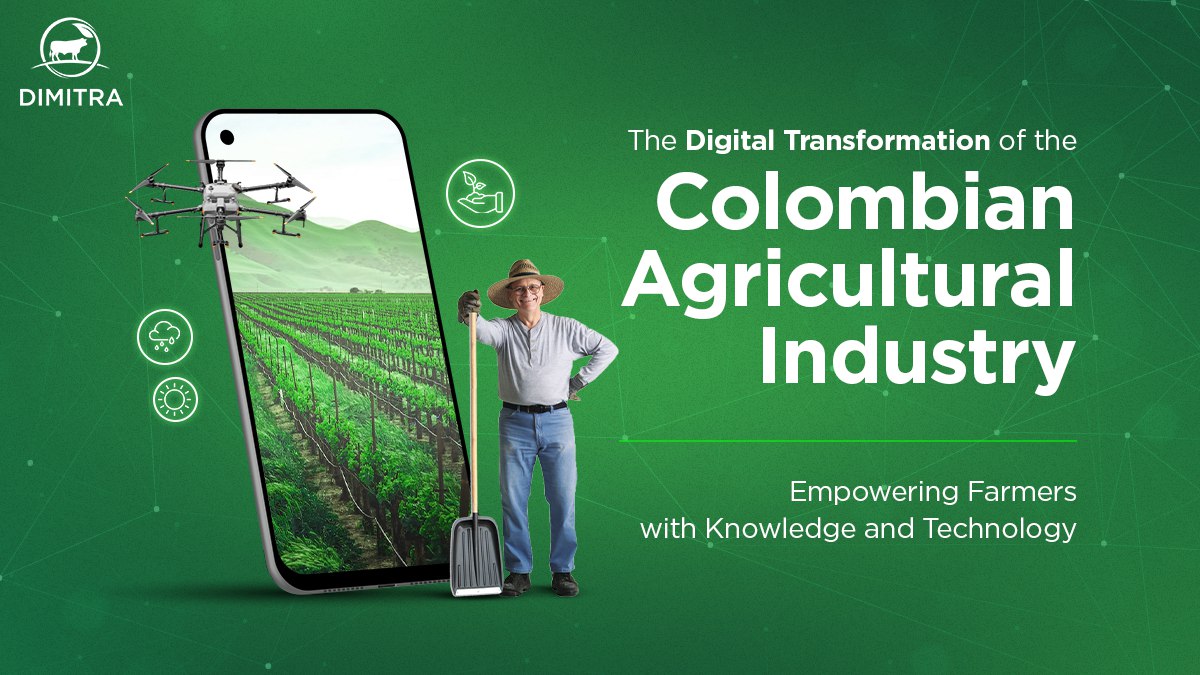
The Digital Transformation of the Colombian Agricultural Industry

BELIZE CITY, BELIZE — Dimitra Incorporated, a global Agtech company, is on a mission to make technology available for farmers worldwide. As a result, Dimitra has signed an agreement with the Uniagraria University of Colombia. Uniagraria is one of Colombia’s most recognized universities focused on agribusiness. Dimitra and Uniagraria will teach small holder farmers how to use digital technologies to increase their yield, reduce expenses, and mitigate risk within the Colombian agricultural industry.

In the Colombian agricultural industry, knowledge about Agtech is minimal. Small and medium farmers hold responsibility for 83.5% of the goods produced for the local region supply chain and food security. Dimitra’s Connected Farmer Platform utilizes a data driven farming approach. Agricultural production rates can increase by implementing these agriculture methods.

It is necessary to lead at the national level, to implement these changes on the farm. One way to do this is by spreading the knowledge of the industry’s digital transformation to professors and university students, who can knowingly apply and use these technologies.

Dr. Fernando Mahecha Aguilera, Dimitra’s Colombian Sales Partner, says, “combining Dimitra’s and Uniagraria’s knowledge gives this effort more value. With the support of an expert entity in education, such as Uniagraria, the utility of this project will grow immensely.” Working with Uniagraria is just the beginning. Joining forces with other institutions will add value even more to this partnership through joint research and data analysis.

Dimitra and Uniagraria are exploring opportunities to expand technical knowledge, increase profit, and reduce costs to smallholder farmers who currently don’t have access to modern technology. With Dimitra’s Connected Farmer Platform, farmers can produce more sustainably, economically, and environmentally.

Dimitra Incorporated

New Horizon Building, 3-1/2 Miles Philip S.W. Goldson Highway, Belize City

info@dimitra.io
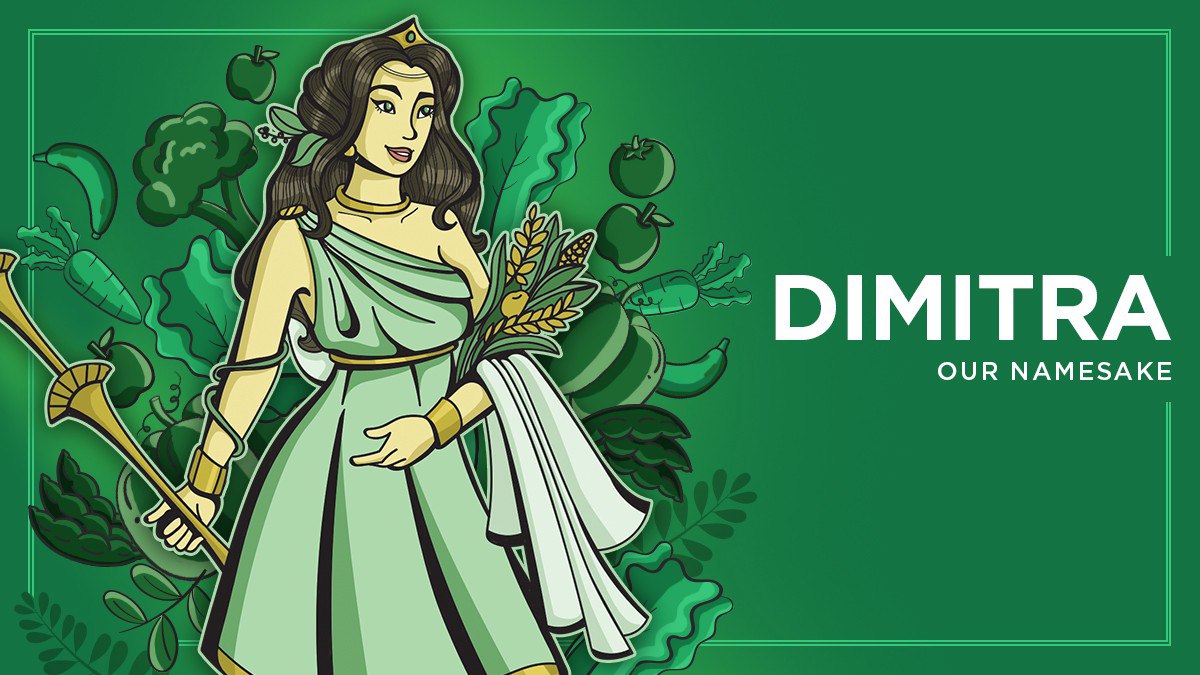
Dimitra: Our Namesake

Dimitra is a unique name. It is a nod to ancient mythology. In Greek culture, Demeter, or Dimitra, is the Goddess of Agriculture, responsible for bringing knowledge on how to cultivate the land and credited for producing successful harvest. Our company, Dimitra, aligns beautifully with this idea of providing resources to increase growth for farmers.

Here’s a little history on Dimitra, and how the tales and ethos surrounding her identity align with our own mission.

The Goddess Dimitra

Δημήτηρ, Dimitra/Demeter, is an Olympian goddess, ruling from Mount Olympus over the harvest and agriculture, the grains, and fertility of the earth. They would affectionately call her “she of the grain” and “giver of customs.” A distinctly female divinity, the motifs that surround Dimitra’s identity include fruitfulness, one who brings something to pass, and divine giver. This benefactress presides over sacred law that governs the cycles of life, death, the crops and the harvest.

  • Dimitra is the mother of Persophones, the goddess of spring growth who searched for her daughter. A tale described in the Homeric Hymn to Demeter, thought to have been penned sometime between 1400 – 1200 BC.
  • Dimitra, a Greek goddess, closely associated with a Roman goddess, Ceres, and an Anatolian goddess, Cybele.
  • As an earth goddess, Dimitra’s iconography includes fruits, grains, flowers, and similar symbols of growth and new life. Her emblem is a poppy.

Praise of Dimitra

Cretans were recorded to have worshiped the goddess Dimitra. She was in two major festivals: the Thesmophoria festival and the Eleusinian festival.

Ancient cultures did not have access to information about the science of farming. They were governed by superstitions, appealing to goddesses like Dimitra to bring them prosperity and good fortune.

Today, while the body of knowledge around agriculture has improved, there are still many farmers around the world who have understanding but lack the tools needed to support growth.

That is where we come in, and why we take this namesake as a charge to further our mission.

Dimitra: Agricultural Technology for Farmers Around the World

Here is a summary of our purpose-built platform:

“Dimitra Platform v1.0 is built to ensure equal access to technology, knowledge, and marketplaces to farmers globally. Dimitra v1.0 is a global platform that fosters collaboration between farmers, government ministries, international aid organizations, universities, agricultural input and service companies, finance and insurance companies, and other key stakeholders in the Agricultural value chain.”

We are working in the world, offering oversight, guidance, and provision to farmers.

Using the power of technology we are passionate about equipping smallholder farmers all over the world with resources that, compared to how they operate today, may even feel supernatural.

To be sure, the intricacies of technology connected by IoT and using things like data, sensors, satellite imagery, and more is at a level of sophistication most smallholder farmers in developing countries have never dreamed of.

We are delivering on a vision to enhance the agricultural capability of farmers across the globe.

Farmers are now, and always will be, at the heart of our solution. We work every day to give more to them.

Dimitra Incorporated

New Horizon Building, 3-1/2 Miles Philip S.W. Goldson Highway, Belize City

info@dimitra.io

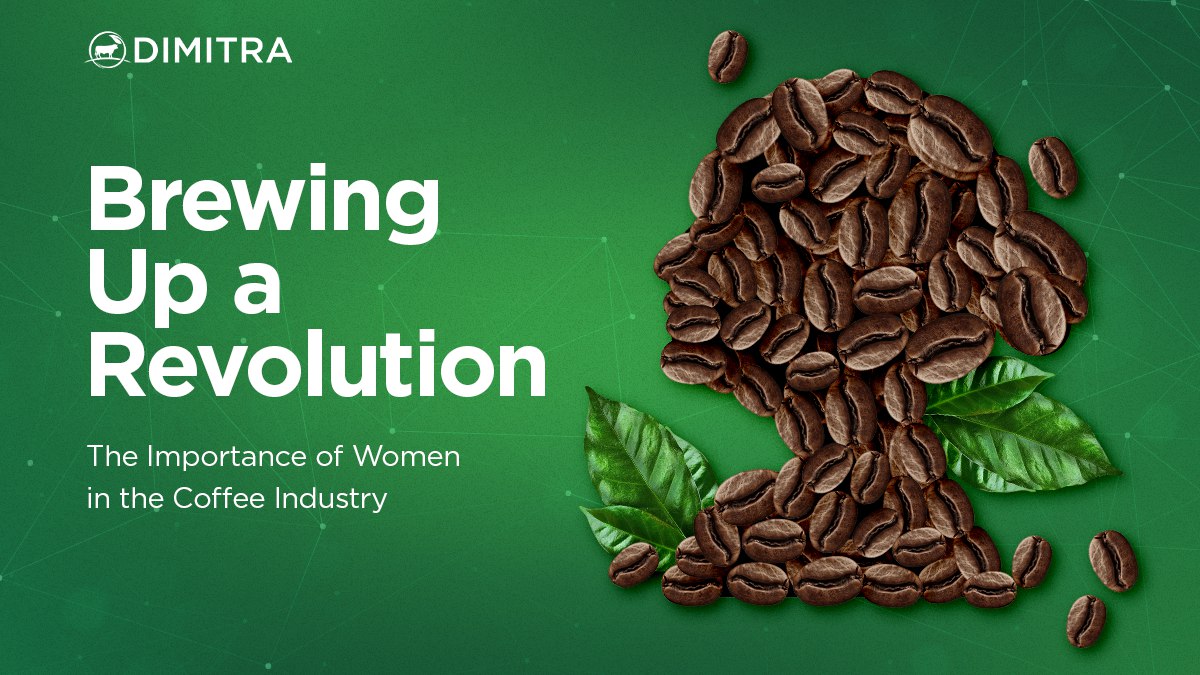
Brewing Up a Revolution: the Importance of Women in the Coffee Industry

In under developed countries around the world, women make up an average of 45% of the agricultural workforce. Women-run farming operations provide essential income for families combating poverty and lend to the economic needs of developing communities.

In the coffee industry alone, female farmers contribute up to 70% of labor in leading regions. But the effects of gender inequality do not go un noticed. As economic barriers and safety risks in the field continue to hold female farmers back.

Inequality Challenges Faced by Women in the Coffee Industry

Coffee farming takes place in some of the least developed areas in the world. Where farmers lack access to modern resources to sustain growth. In these regions, women experience limited access to farm funding, land rights, agricultural tools, and technology that are essential to reaping adequate yields and profits each year.

The ownership and holding of land are two domains of an opportunity. Landowners are those who legally own the rights and documentation to control or transfer their land as needed.

However, only 18–50% of landowners in the world are women, and women account for only 15% of agricultural land holders globally despite making up so much farm labor.

Domestic requirements place further limitations on female farmers. Working mothers are often solely responsible for their households’ childcare, cooking, cleaning, and overall health. Meeting these demands results in fewer working hours compared to men, and limits their capacity to earn the estimated income goals required to live above poverty.

Between 20% to 30% of coffee plantations are staffed with female farm laborers, meaning out of the estimated 25 million coffee farmers in the world today, over 5 million are women. Still, because of gender inequality, limited small holder resources, and domestic commitments, these women produce 20% less than male coffee farmers.

The International Coffee Organization (ICO) predicts if these gender gaps could be mitigated with continued effort, there would be an extra 30 billion cups of coffee per year. In global agriculture as a whole, closing the gender gap would ultimately decrease world hunger.

Meet Fitria Syahroni

Fitria Syahroni (age 34) works along side her husband at the Solok Radjo buying station in Sumatra, Indonesia. In that role, she educates local farmers on how to plant and harvest red cherry, while her husband Endro works in fermentation. She is a second generation leader of a Solok Radjo coffee cooperative two and a half hours outside of Padang.

Fitria’s story is an inspiring one. Since 2016, she has been legally blind due to complications from diabetes. Despite her disability, she works hard every day to proactively communicate and improve the skills of farmers throughout the region.

She explains, “I can listen, I can touch, I can smell, and I can talk. My blindness does not limit my goals and my purpose of life. I even want to do more. I encourage people to continuously learn, to never be afraid of making mistakes.”

Her impact has grown beyond the immediate area, and she now mentors students from universities and schools in the important practices around farming coffee. She is also now part of the “Coffee Curriculum” initiative championed by Dimitra, helping liaise between leadership at local schools and supporting curriculum preparation and delivery. Fitria and Endro have been local champions of the Dimitra Connected Coffee platform, embracing how technology can help manage their soil, farming and processes and help them make better decisions regarding their end to end coffee process.

Fitria is one powerful example of how women are stepping into more leadership roles in the coffee industry. One key catalyst that is shrinking the gender gap is agriculture technology.

Accessible Agtech to Bridge the Gender Gap

The United Nations’ Sustainable Development Goals (SDGs) is a list of 17 actions toward improving life for the planet and people everywhere. Two of the top five of these goals include mitigating world hunger (#2) and achieving gender equality (#5).

For female land laborers and small holder farms everywhere, reliable technology is the answer. These modern technologies help empower female farmers to over come obstacles faced in the field by enabling sustainable growth, smart farming practices, and maximized profit.

Governments and economies working with technological solutions help break down the barriers of the gender gap through:

  • Land management
  • Traceability
  • Optimized crop planning
  • Land documentation
  • Informed trade and purchase
  • Inventory control
  • Operation cost management
  • And more

Encouraging access to land holder data, farm funding opportunities, coffee cooperatives, and farm performance management are critical to the future of coffee farming. No matter the gender, location, or situation of a farmer. Every person working in agriculture deserves equal access to the tech and education required for growth.

As a leading agricultural technology company, Dimitra aims to fuel this mission by providing reachable solutions to global coffee farmers. Dimitra’s Connected Coffee Platform advances small holder farmer operations to improve farmer potential, productivity, and profit. Dimitra is partnering with local agencies and governments across the world to work towards these goals.

Dimitra embraces block chain technology and uses their $DMTR token as a catalyst for the Dimitra eco system allowing farmers to exchange their data for tokens which can be used to access advanced analytic reports, sensors, farming aids, drone or satellite services or convert tokens to currency. $DMTR token holders enable Dimitra’s various applications to be delivered to small holder farmers free of charge by sponsoring a project and staking their tokens.

Dimitra Incorporated

New Horizon Building, 3-1/2 Miles Philip S.W. Goldson Highway, Belize City

info@dimitra.io